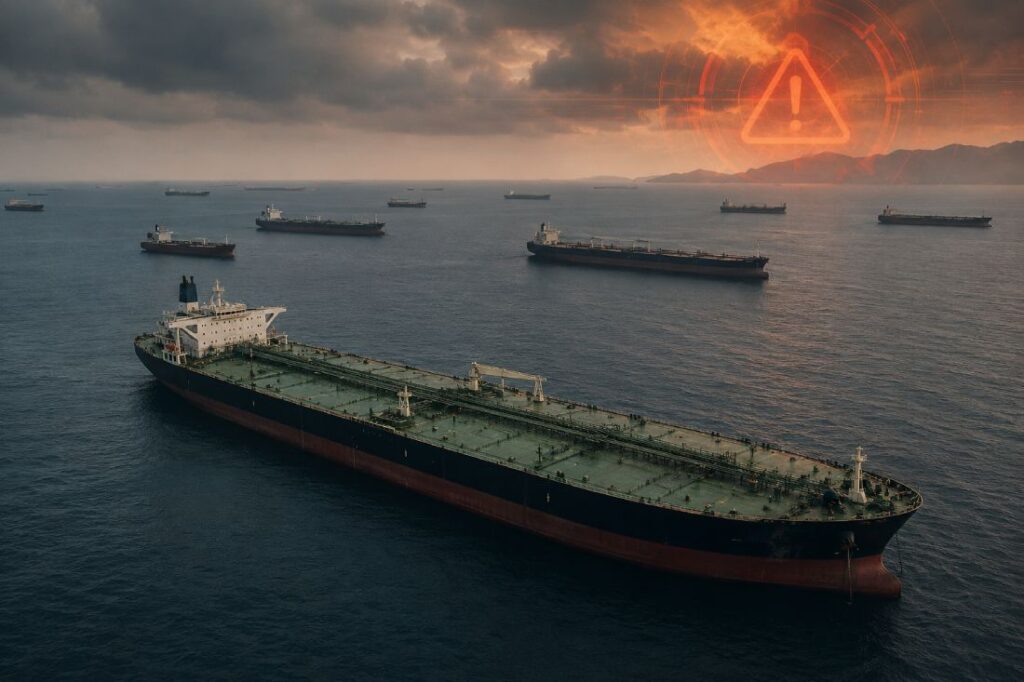
This week the gold story has been dominated by the FOMC minutes and the Iran uranium directive. Both are important. But a third development — quieter, more technical, and potentially more consequential for gold’s medium-term direction — also emerged. The head of the International Energy Agency warned this week that global oil markets are approaching what he called a “red zone” as strategic reserves continue to dwindle and production cannot compensate for the Hormuz disruption.
The IEA’s concerns are structural. The Strait of Hormuz has been effectively closed for 84 days. Approximately 20% of global oil supply has been rerouted, reduced, or disrupted. Strategic petroleum reserves in the United States, Europe, and Asia have been drawn down to partially offset the supply shock — but those reserves are finite. The IEA chief told CNBC this week that if the Hormuz disruption continues for another 60 to 90 days without resolution, oil supply buffers will be exhausted, and the world could face sustained oil above $130 per barrel.
$130 per barrel oil would be catastrophic for the current gold paradox. It would push US CPI above 5%, making a Fed rate hike not just probable but almost mandatory. That is the nightmare scenario for gold’s short-term price — and the reason the IEA’s warning matters for every buyer watching prices this week.
But here is the other side of the $130 oil scenario. At that price level, the economic pain becomes so severe — airline shutdowns, manufacturing contractions, consumer spending collapse — that the political pressure on all parties to resolve the Hormuz conflict reaches a breaking point. Historical precedent is clear: extreme economic pain from energy disruption has always eventually forced resolution. The 1973 embargo, the 1979 crisis, the 1990 Gulf War — each ended not because the underlying political dispute was resolved but because the economic cost became unsustainable for all parties.
In that context, the IEA’s “red zone” warning is actually a signal that the Hormuz resolution timeline is shortening, not lengthening. Every additional day of disruption increases the pressure on Iran, on the ceasefire parties, on China, and on global energy consumers to accept terms and reopen the strait. When that happens, oil falls sharply, inflation eases, and gold’s structural tailwinds — which have been building throughout the suppression period — release simultaneously.
Gold at $4,524 with the IEA warning of a “red zone” is gold priced at the exact moment of maximum short-term pain and maximum long-term opportunity. The gateway has never been more clearly marked.
24K: $145.61/gram | 22K: $133.48/gram All prices USD. Indicative only. Please confirm in store.