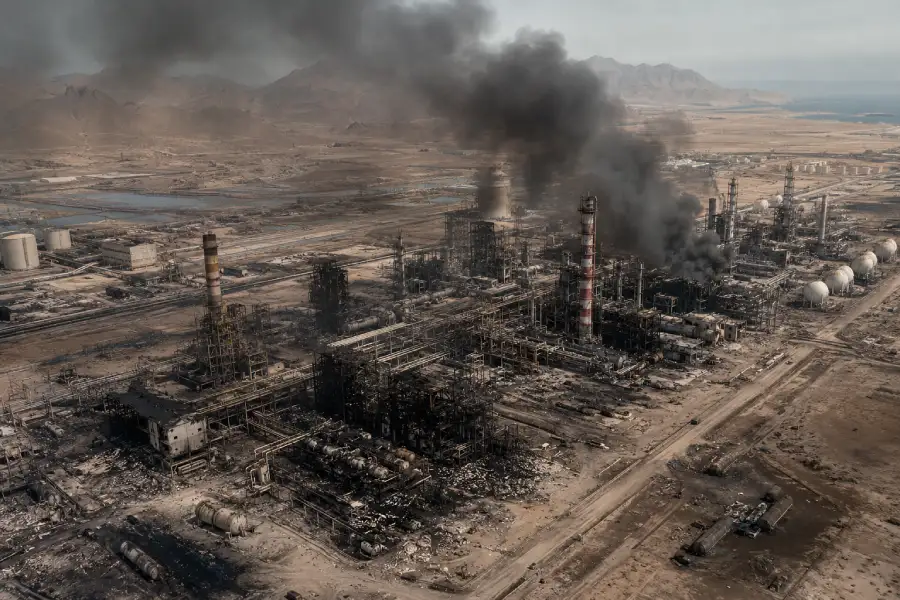
A figure buried in the diplomatic briefings around this weekend’s ceasefire framework stopped analysts cold. An Iranian official disclosed that the US-Israel war has caused approximately $270 billion in direct and indirect damages to Iran — a figure so large it dwarfs the Iranian GDP of approximately $400 billion. The Iranian President Masoud Pezeshkian said reparations are “the only way” to end the conflict. The Iranian economy is described as in “acute crisis.” The Iranian rial has lost extraordinary value. Oil infrastructure has been targeted. The population is bearing the weight of sanctions, military destruction, and the economic cost of closing Hormuz.
This number matters for gold in a direct and specific way. When one party to a conflict has suffered $270 billion in economic damage with an economy of $400 billion, that party faces an existential economic pressure to reach a settlement. The ceasefire framework announced this weekend — Iran agreeing to de-mine Hormuz within 30 days in exchange for ceasefire extension and the start of nuclear talks — is the direct output of that pressure. Iran cannot sustain this conflict indefinitely. The economic mathematics do not allow it.
This is the scenario that gold’s structural story has been waiting for. Not an immediate collapse of the gold-suppression mechanism — the uranium dispute, fresh strikes this weekend, and a fragile ceasefire ensure it won’t be clean or fast. But the direction is now definitively toward resolution. Every week that passes with the ceasefire framework in place reduces the probability of renewed full-scale conflict and increases the probability of Hormuz reopening. Oil’s current level of $94 per barrel — elevated but below the $106 peak — reflects this partial pricing of resolution.
For buyers, Goldman Sachs’s $5,400 year-end target represents an 18.9% gain from today’s $4,535. J.P. Morgan’s $6,000 to $6,300 target represents 32% to 39%. These are not speculative forecasts. They are the published models of the world’s largest institutional investors, built on the assumption that the Hormuz closure resolves within 2026. The ceasefire framework this weekend moved those models from theoretical to near-certain on the resolution point. The gateway to gold’s next major move has never been more clearly open.
24K: $145.71/gram | 22K: $133.57/gram | 21K: $127.50/gram All prices USD. Indicative only.