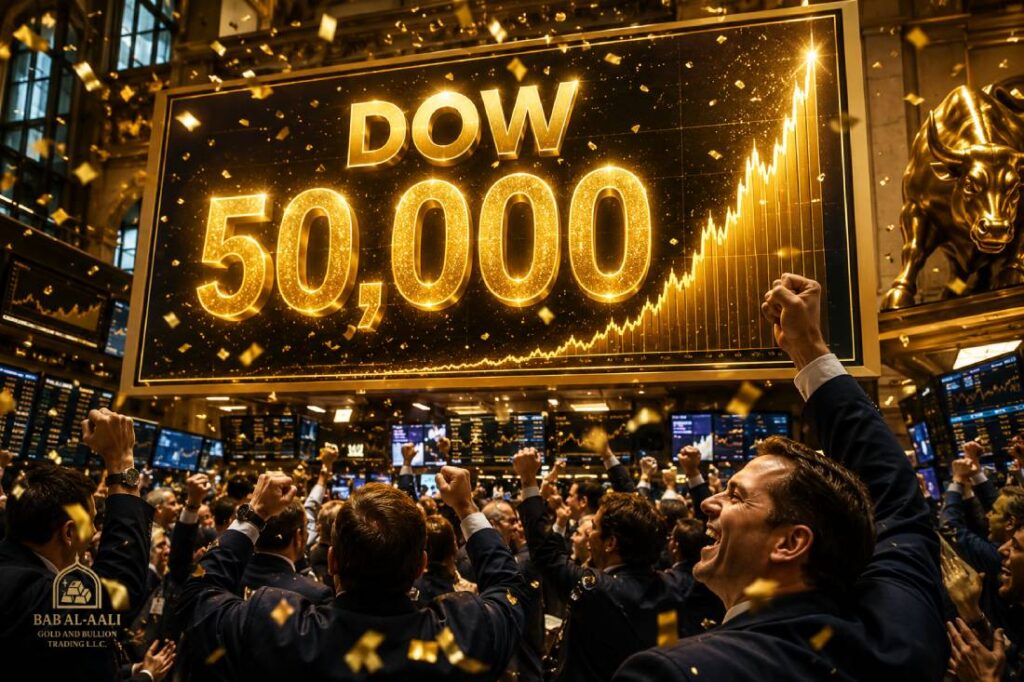
When the Dow Jones Industrial Average crossed 50,000 for the first time in history on Wednesday May 6, and Brent crude oil simultaneously fell below $100 per barrel for the first time in weeks, gold was already moving. By the time Asian markets opened on Thursday, gold had added more than 3% in a single session — one of the strongest single-day moves of 2026. The precious metal is now trading near $4,739 this Friday morning, a 12-day high, and the week’s story is one of dramatic reversal.
The catalyst was the White House’s announcement Tuesday that it was pausing “Project Freedom,” the US Navy’s operation in the Strait of Hormuz, while peace talks with Iran accelerated. The emerging deal — a one-page Memorandum of Understanding according to Axios — would see Iran halt nuclear enrichment, the US lift sanctions and unfreeze billions in frozen Iranian assets, and both sides reopen the Strait. Saudi Arabia and Pakistan played mediating roles. Trump told reporters that Iran “wants to make a deal very much” and that the “already legendary Epic Fury will be at an end” if Iran agrees.
The gold recovery follows a logic that the market finally executed correctly this week. A Hormuz resolution means lower oil. Lower oil means lower inflation. Lower inflation means the Federal Reserve can eventually cut rates. Lower rates mean a weaker dollar. A weaker dollar means higher gold. This chain of cause and effect — which has been running in reverse since February — has now begun to unwind. The gates to gold’s next leg higher are open, and the gateway is wider than it has been in months.
This morning’s NFP data is the last piece. The week closes today. Whatever the jobs number delivers, the directional shift in gold this week is real, confirmed by volume, and supported by fundamentals that have not changed since January’s all-time high of $5,595.